Atlanta People’s Movement III

Insights from a Democratic Socialist

When a fellow comrade first mentioned the People’s Movement Assembly (PMAs) to me I was curious, but never expected the groundbreaking impact that would resonate through me, all the Atlanta DSA members, and the broader community that engaged with the idea. Done frequently enough with the goal of connecting different social activists and their groups they can become something akin to a mobilized and organized social movement against fascism, beginning in our backyard and local communities. Literature reflecting the organizational ideas made it clear that the PMA is not just about fighting fascism; it is about a whole range of different survivability tactics against ecological devastation and economic exploitation particularly affecting historically marginalized communities 

As an attendee of the March 14 PMA, one had the opportunity to engage in two sessions with the opportunity to choose from around ten breakout groups. Each group had one to three facilitators who were tasked with moderating the discussions.

​The radical, revolutionary nature of PMAs is that they bring community members together. However, true revolution happens when we involve the full extent and power of working class people. The organization that coordinated with other grassroots orgs and spearheaded this event was Project South; an org dedicated to an abolitionist approach to ending poverty so as to put people over profit. DSA runs on the same logic, but has mainly seen progress through electoral, mutual aid, and other collaborative organizational means; Even if we disagree, the very act of opening dialogue, bringing people together, and connecting different orgs breeds the political dissent not against each other but against fascism that is becoming increasingly central to American citizens in the current era.

Many participants understood proper conduct even if it was not directly outlined at the  PMA because there is a deep seated frustration with politics today. For example, diverse backgrounds breed diverse perspectives that we must acknowledge, participants should allow space for others to contribute but also honor their unique voice, even if groups do not find complete consensus there must be an effort to unify under certain values, principles, or actions, and finally cooperation over debate should be encouraged. These are all PMA rules that even if not stated are self-evident. The central theme of these PMAs is to inquire into what issues concern which citizens. 

​When the Olympics came to town in 1996, organizers formed Project South and the Hunger Coalition to react to the changing city. Project South coordinators for the PMA emphasized the generational nature of the social justice project and noted that formerly enslaved populations built the Atlanta community over 150 years ago. Some of our major goals as activists and organizers is fostering real public safety, ensuring basic needs, and fostering some semblance of equality in decision making especially during times of authoritarianism. The PMA goals are fourfold: Spreading knowledge, skills, and connections, and cultivating community building. Every PMA had a major community oriented priority: The first Atlanta PMA on March 22, 2025, sought public safety on community terms through the building of third party organizations. The second Atlanta PMA on September 6, 2025 set goals of stronger hyperlocal institutions and challenging misinformation from AI. The third PMA voted to share skills and coordinate for power, reaching beyond the assembly.

​After a second breakout session, the groups came together, appointing a representative to report back the group’s discussion on their issues. I joined participants young and old in the “Know Your Rights” breakout group, including an attorney as one of the main coordinators. We discussed how to be more aware of several legal realities in America: differences in laws between states, the importance of de-escalation work, policy changes on multiple levels, and advocacy against the most inhumane deportation laws on the books. Someone even mentioned the importance of knowing the hotline number for mentally ill crises situations that could avoid unnecessary violence. When the groups came together I was also struck by the value in having the phone number of representative state organizations like the Georgia Latino Association for Human Rights (GLAHR) to vouch for targeted citizens, and having talking points for organizers when speaking with law enforcement and other commercial bodies. I wanted to know: Is there a potential for any real social, cultural, or political power through such PMAs?

​The Step-by-Step Guide to Making your own Neighborhood Assembly emphasizes that: We must grapple with what democracy means to us, when our politicians no longer represent us, we’ve expanded the surveillance system and have an operational Cop City, seen the city privatize decisions away from democratic control, and allowed a continued housing crisis that’s forcing people onto the streets. The value of the PMAs is that they seek to transcend political partisanship in favor of true cultural and social transformation by bringing together diverse groups of people with diverse perspectives and skills to find solutions to problems in their neighborhoods. As the guide concludes: Food, housing, healthcare, education, self-determination, self-defense, resistance are all human rights, but they can only be achieved when communities organize to build real lasting change. The final ask was for individuals to connect with each other, with the sponsoring orgs, and mobilize  as many of these groups as possible for the planned May Day protest.

For DSA’s other projects, like electoral strategy, deeply democratic bodies like peoples’ assemblies are pathways to organize mass action and rally the people to our side.
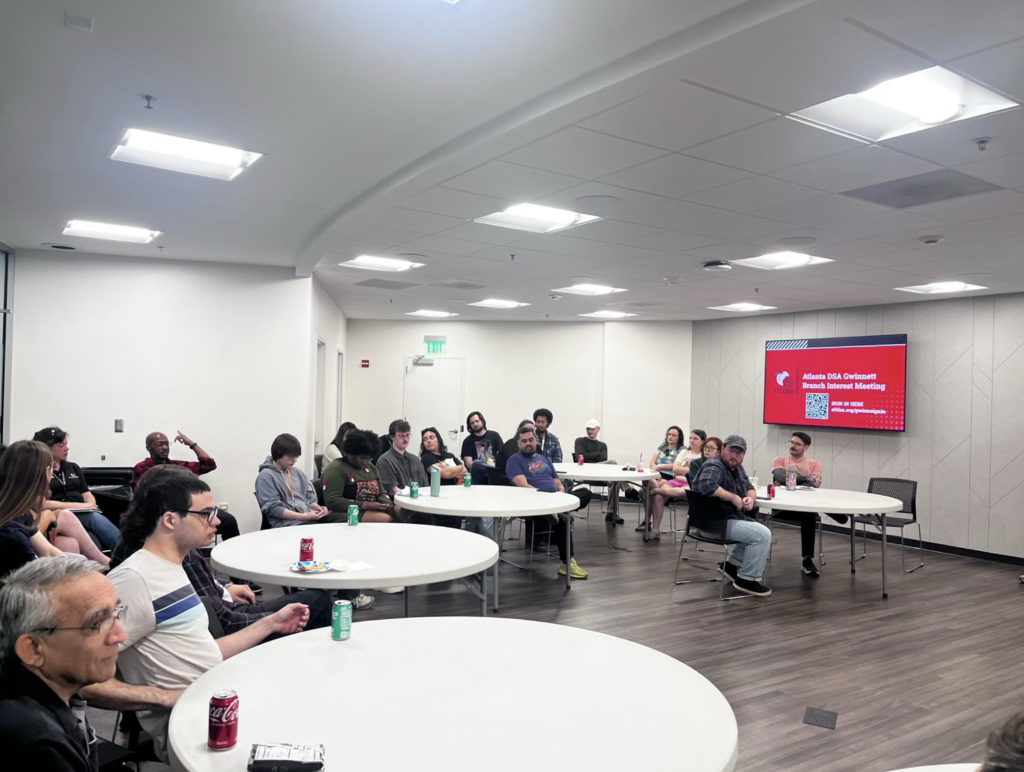
Gwinnett Begins Organizing!

Atlanta DSA Interest Meeting Held in Lawrenceville

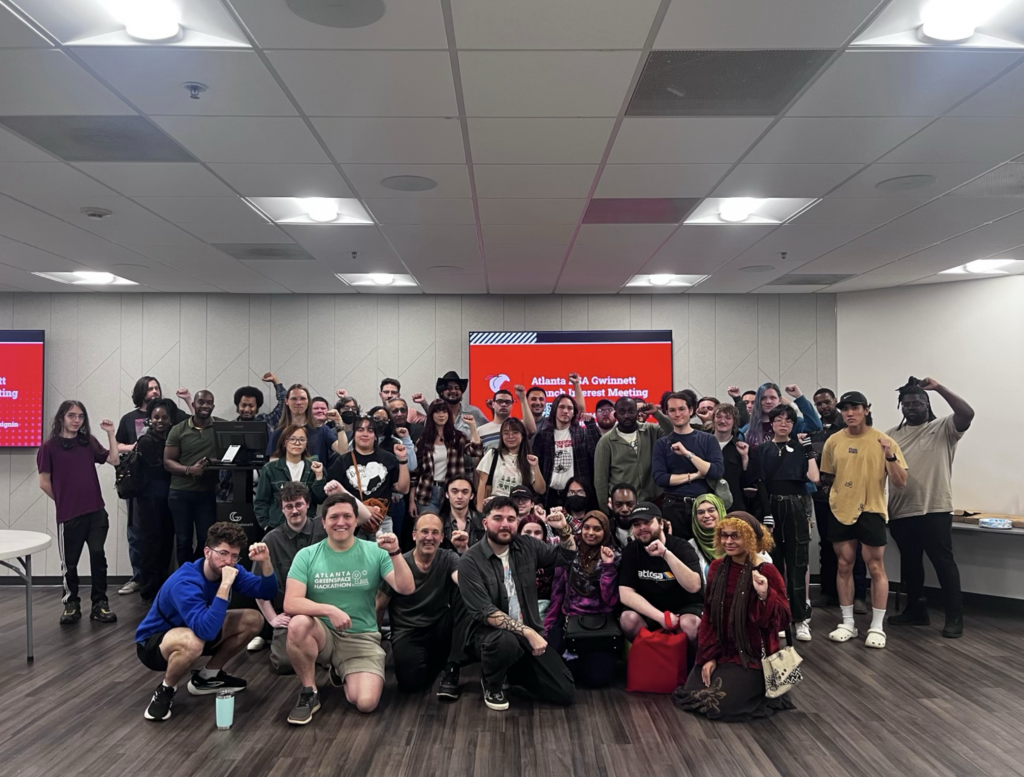
Around 60 attendees attended the Gwinnett Branch interest meeting
Around 60 attendees attended the Gwinnett Branch interest meeting.

In July of 2024, the metro-Atlanta county of Gwinnett officially became the second county in the state of Georgia to cross the mark of one million residents, behind only Fulton County, home to Atlanta itself. This growing population indicates that Gwinnett needs an Atlanta DSA branch of its own to promote socialism and to act as a vehicle for the voice of Gwinnett’s working class in metro Atlanta’s political sphere. Thus, on the afternoon of Sunday, March 7th, 2026, Atlanta DSA organizers, with the help of Georgia Gwinnett College’s YDSA (GGC-YDSA), held a Gwinnett branch interest meeting, which was attended by well over 60 people at GGC. A petition to formalize a Gwinnett branch has been underway since.

The meeting began with attendees sharing what drew their interest in the DSA and a few common sentiments rang throughout the 60+ gathered. Some of those sentiments included healthcare costs, taking political action for Palestinian liberation, wanting to act against growing right-wing power, and making life affordable in Gwinnett. Another common sentiment was that of a previous desire to be involved with Atlanta DSA, but distance to the city made that desire difficult to actualize.

Following introductions, the meeting changed gears to explaining the DSA structure to attendees. Much of the emphasis was put on the DSA’s nonprofit, volunteer-run system and how it functions bottom-up rather than top-down, as is the status quo for political organizations in this country. The meeting leaders also highlighted the DSA’s electoral strategies, with focusing on grassroots level matters, as exemplified by the recent successes of Kelsea Bond and Gabriel Sanchez in the state of Georgia. Following that, information about Atlanta DSA’s different committees (labor, political education, electoral, etc.) and identity-based sections (Afrosocialists and socialists of color, feminist socialists) was shared with the attendees.

As the meeting came to its conclusion, the group discussed how DSA works with other working-class organizations in the Atlanta area to advocate for the improvement of working class life, emphasizing DSA’s collaborative structure, especially during this period of right-wing fascism attacking the working class and the country’s minorities. Finally, at the meeting’s end, the petition to start a Gwinnett branch of the Atlanta DSA was introduced.

The structure of the DSA was discussed at length with the group present.

I spoke to two members of GGC’s YDSA leadership, co-chair Josue EC and membership chair Hannah B, who both worked to host the Gwinnett interest meeting. Josue worked to arrange the meeting location, design the flier, and to promote the meeting on the GGC campus and through social media. When asked about what he hopes to see happen through a Gwinnett branch of Atlanta DSA, he expressed that he feels that the current system of elitist American politics pushes members of the working class away from engaging politically. Thus, through a Gwinnett branch of ATLDSA, he hopes to energize leftists across the county to become politically engaged and bring about positive change in the lives of Gwinnett’s working class. Hannah B, who also helped in organizing the interest meeting, spoke about how she hopes a Gwinnett branch will work to bring socialism locally to Gwinnett, not just limited to the city of Atlanta. One specific goal she she shared is for a Gwinnett branch to push for low cost/free public transportation in Gwinnett, which would include the expansion of MARTA. 

The meeting had a very positive and optimistic outlook to it, as the people of Gwinnett are hungry for real, meaningful change and are excited to engage with DSA to bring about such change. The people of Gwinnett are hopeful that in the face of right-wing fascism and elitist politics, a future Gwinnett branch of ATLDSA will advocate for immigrant rights, affordable housing, free healthcare, and local support for Gwinnett’s working class.

May the future of the DSA in Atlanta be prosperous and may the people of Gwinnett carry their hope towards a future of well-being, safety, and health.

No Contracts, No Coffee!

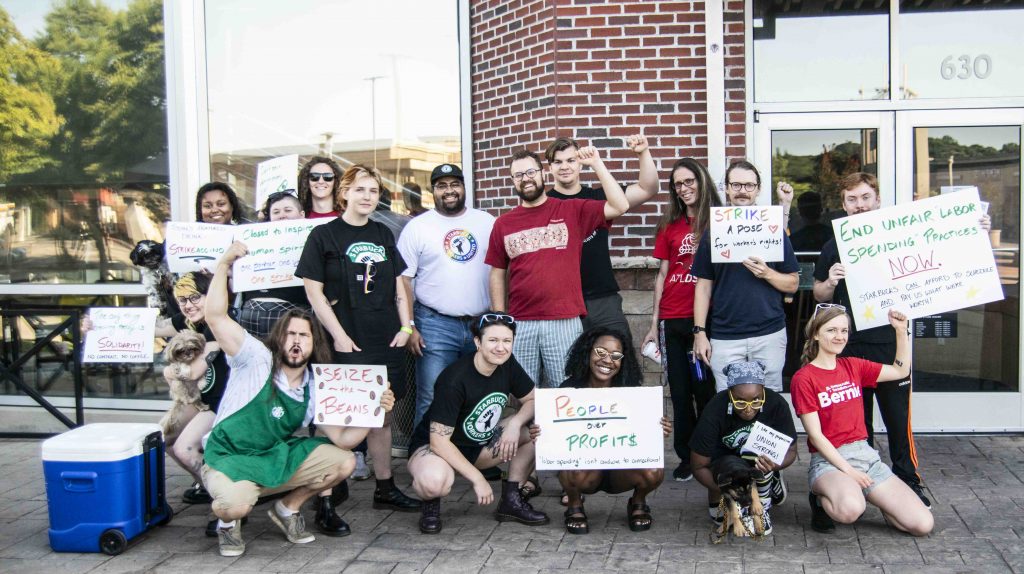
Howell Mill Starbucks employees strike against unfair working conditions.

July 17, 2022 – Barely one month after winning their union election, Starbucks workers at Howell Mill are still fighting to have their voices heard by corporate. Early Sunday morning, partners went on strike against management’s refusal to respond to bargaining requests, retaliation in the form of cut hours, and unfair working conditions.

Continue reading “No Contracts, No Coffee!”

It’s Prime Day for a Walkout!

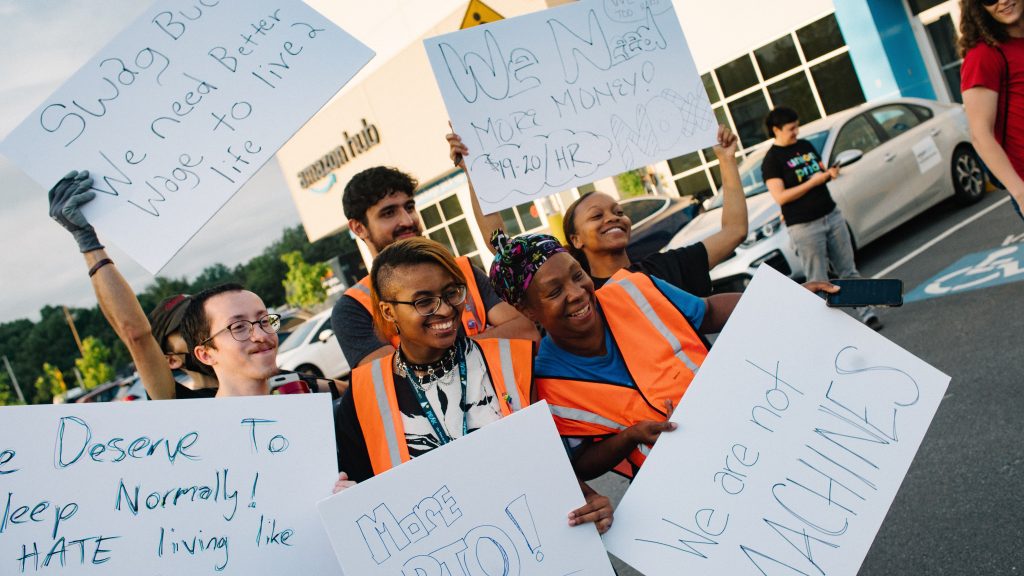
Amazon warehouse workers in Dunwoody, GA walked off the job on Prime Day.

July 13th, 2022 – As the clock struck 7:00 AM early Wednesday morning, 15 Amazon warehouse workers walked out of the DTG5 Amazon fulfillment center in Doraville, Georgia just halfway through their Prime Day shift. Workers exited the facility in protest of management disregarding a petition signed by 60 warehouse employees demanding a $3 wage increase, more paid time off (PTO), and extended break time.

As workers gathered in the parking lot, they were met by excited supporters from Atlanta DSA, Unite Here, and Atlanta Starbucks Workers United—who recently won their own union victories at the Ansley Mall and Howell Mill Starbucks locations. Music blared as workers chanted and made signs calling for fair pay and dignity at work, while supporters set up breakfast and coffee on a folding table out front of the building.

Continue reading “It’s Prime Day for a Walkout!”

Banning Abortion is Class Warfare

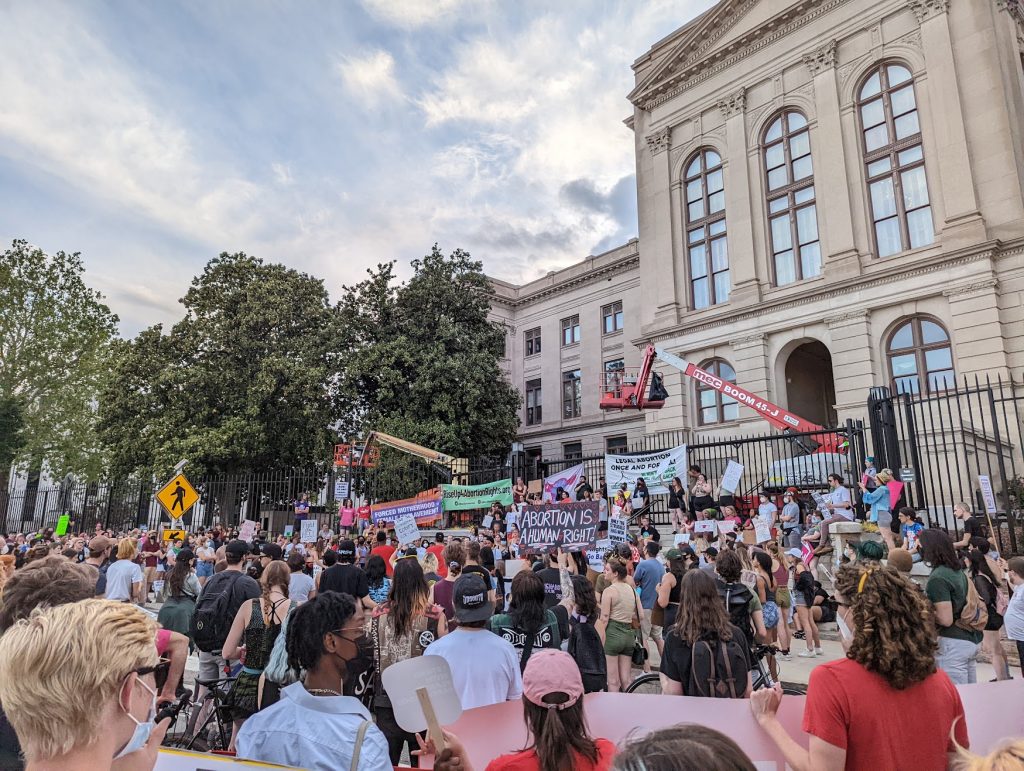
Atlantans rally for abortion rights outside the Georgia State capital.

Tuesday May 3rd, one thousand working-class Atlantans took to the streets in defense of abortion rights. Below is a transcript of a speech from an Atlanta DSA organizer outside the Georgia State Capitol building. To stay up-to-date on DSA’s protest mobilization efforts, follow us on social media at @atldemsoc and subscribe to our weekly newsletter. Become a member and organize with us at atldsa.org/join.

Continue reading “Banning Abortion is Class Warfare”

Solidarity is Brewing in Atlanta

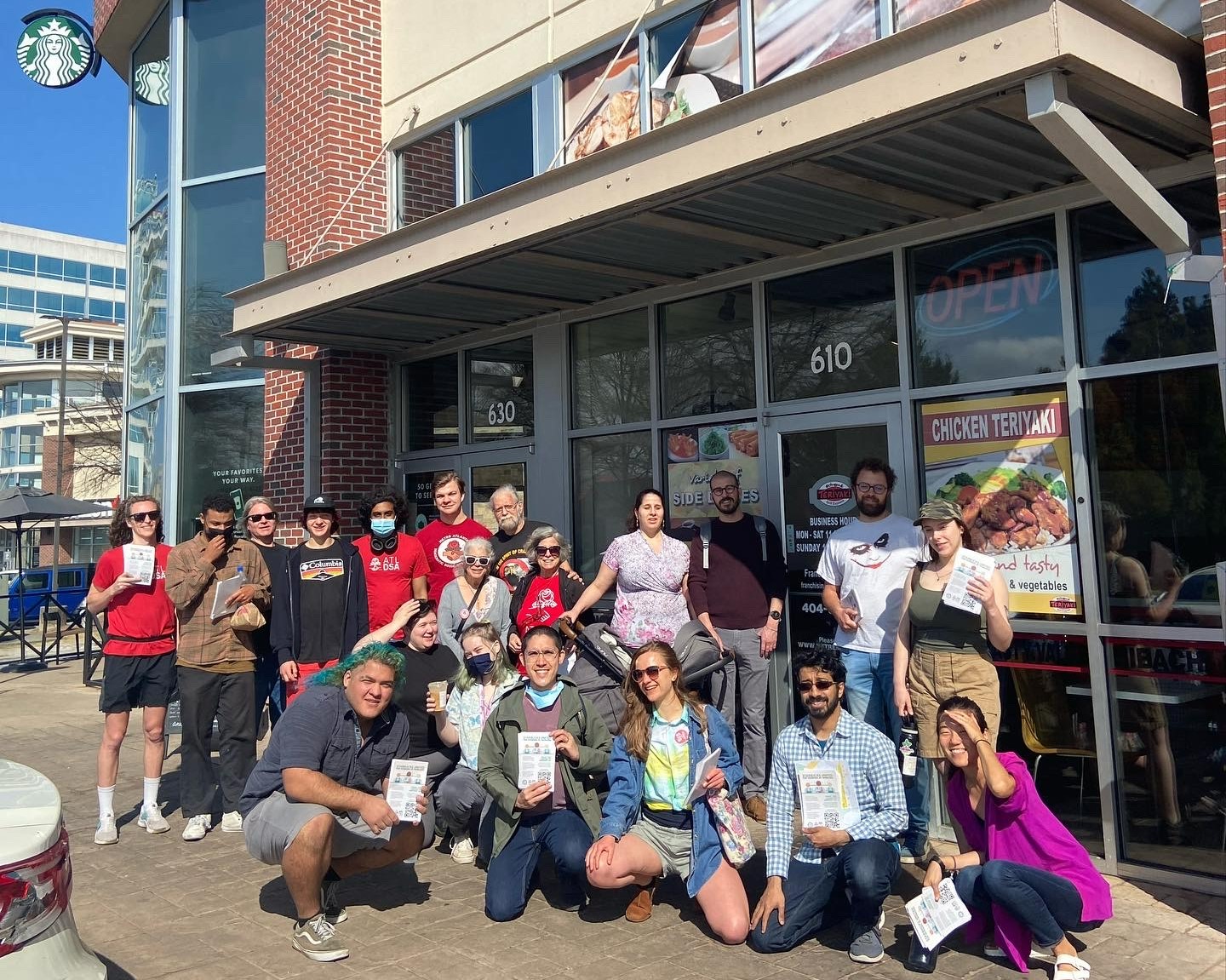
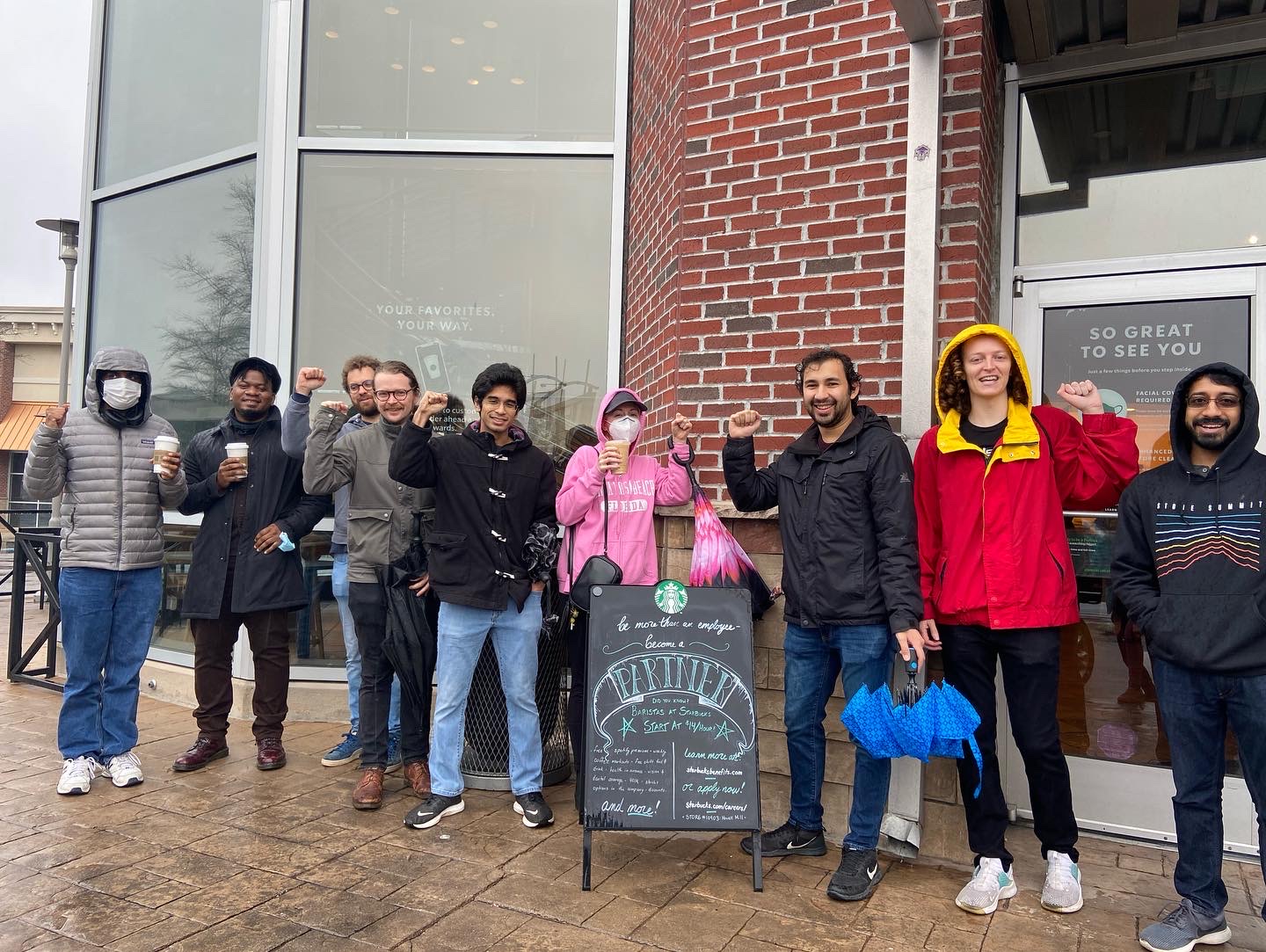
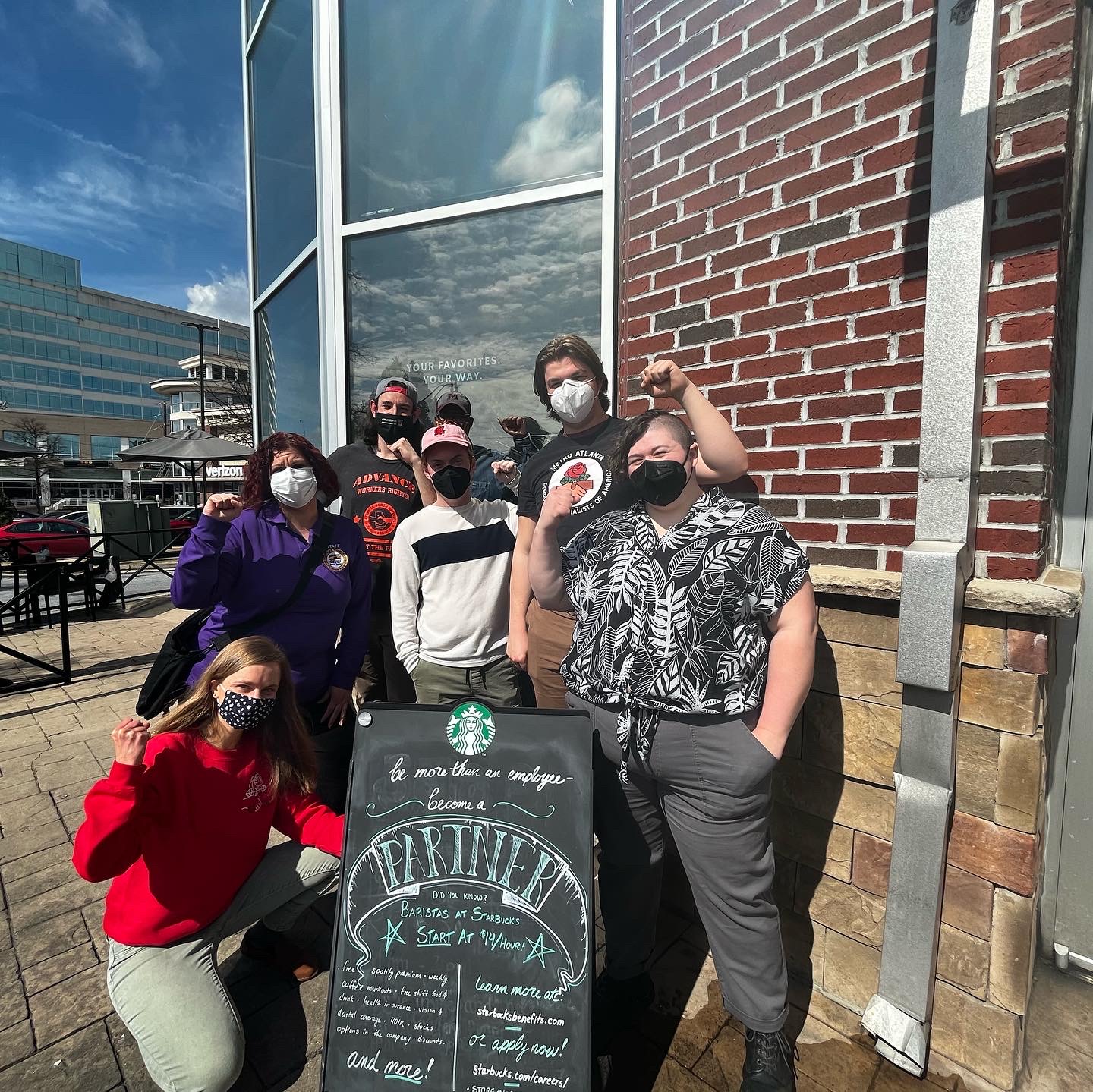
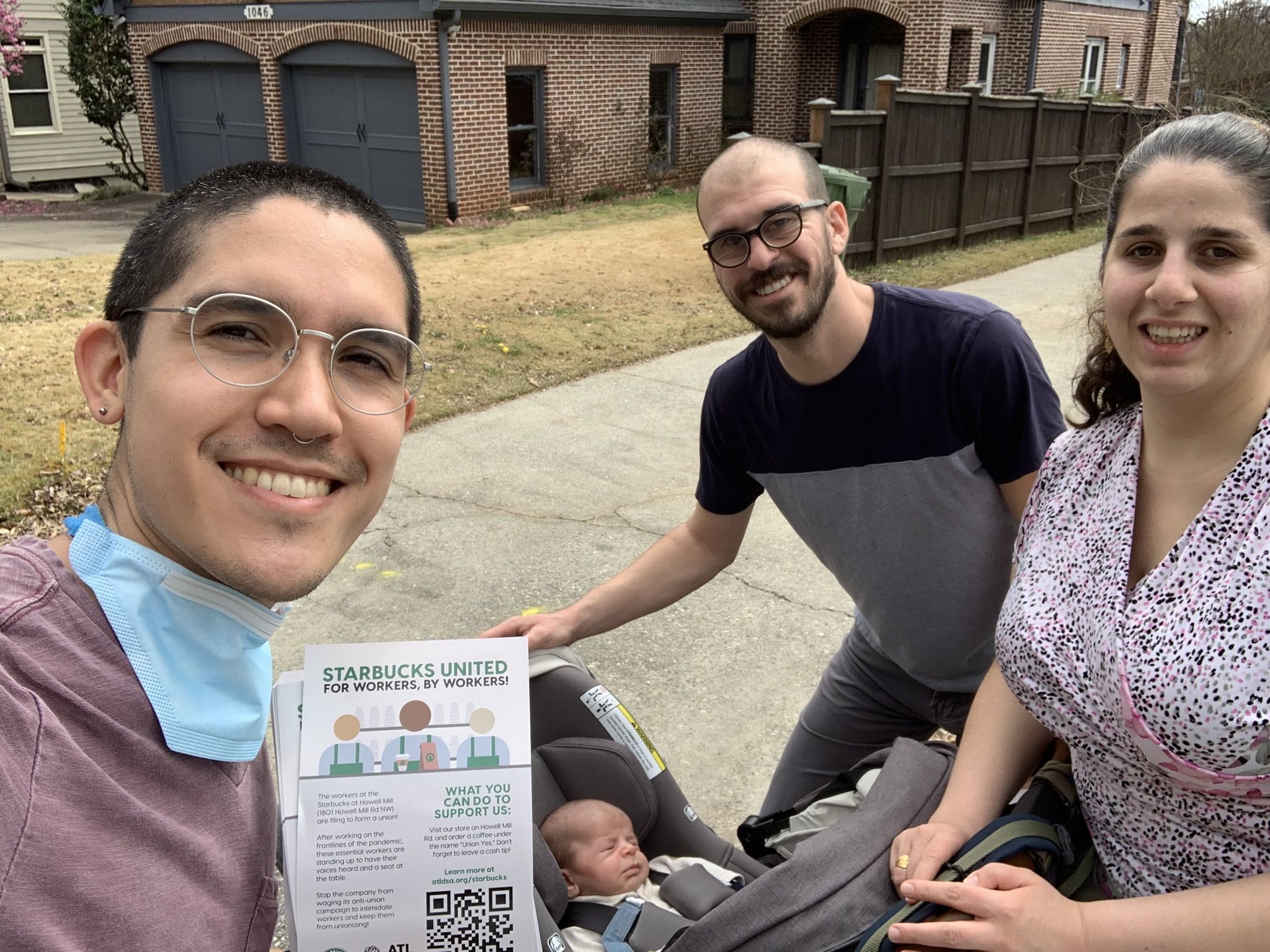
On Sunday March 6th, over 20 Atlanta DSA members gathered outside of the Starbucks at Howell Mill in solidarity with workers fighting to unionize their workplace. Together, organizers flyered the neighborhoods and shopping centers surrounding the store to help raise awareness and build community support for the union as workers face increased pressure from Starbucks corporate.

Continue reading “Solidarity is Brewing in Atlanta”